Master Naturalist Training

Earlier this month, Anna was very excited to learn she’d been accepted into the Fort Collins Master Naturalist Program! The program provides 60 hours of ecological and interpretive training. After completing the training and giving two trial presentations, she’ll become a certified Master Naturalist. Anna will then volunteer to lead field trips and informative nature walks in the Natural Areas around Fort Collins.

Training began this week with classes in the ecology of the Rocky Mountains, taxonomy, life zones, aquatic invertebrates, and the shape and speed of rivers. The teachers and other trainees are awesome. Everyone is passionate about the natural world and each participant brings their own expertise. Anna will likely come away from the training with new friends in addition to new knowledge.
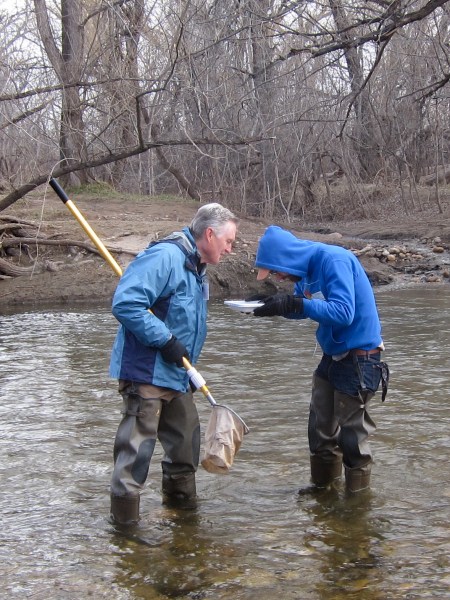
Instructor and student looking for insects in the Poudre River
Looking at insects we found in the Poudre River

Yesterday’s class took place in the middle of the Poudre River, where she practiced dip netting and identification of aquatic invertebrates. So much fun!

Anna will learn much more in the coming month of classes, including:

  • Geology of the Front Range
  • Plant Ecology of the Shortgrass Prairie
  • Mammals of the Rockies
  • Riparian Native Trees and Shrubs
  • Night Sky and Nocturnal Animals
  • Birds of Fort Collins
  • Interpretation and Outreach Techniques for Different Age Groups

Though we won’t write about all the classes here, we’ll make sure to include pieces of Anna’s newfound knowledge in our future hiking posts.

Roots and reflections in the Poudre


High Country News Gallery and Book Review

Want to take a peek into our book Pacific Crest Trail: A Journey in Photographs? Well, now is your chance. High Country News is featuring 12 of Chris’s PCT images on their website. (Soon the gallery will be highlighted on their homepage too!) Check the photographs out here:

http://www.hcn.org/issues/46.3/pacific-crest-trail-a-journey-in-photographs-by-chris-alexander/@@gallery_view

High Country News also published a wonderful review in their print magazine and online. We smiled from ear to ear when we read it:

High Country News Review of Pacific Crest Trail: A Journey in Photographs

If you like what you saw and read, please consider purchasing a book for yourself or a good friend. Thank you.

Backcountry Yurt Trip, State Forest State Park

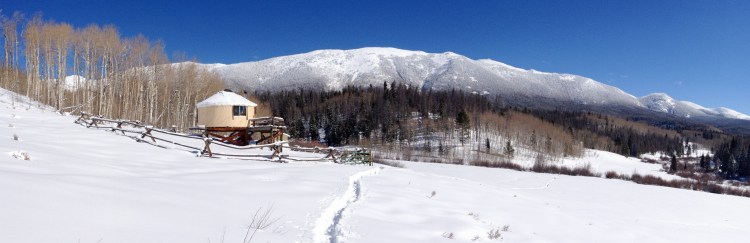
North Fork Canadian Yurt

The most stressful part of winter wilderness travel can be getting to the trailhead. Remote mountain roads may be icy or unplowed. In addition, we have little experience driving in winter weather, since we don’t own a car, and only rent one to go on hikes like these.

On this trip we drove over Cameron Pass and made it within 100 feet of the trailhead, only to get stuck when we stopped to read a sign. Underneath the snow was a layer of solid ice on which the car’s wheels spun freely. Reversing did nothing, and getting out to push had little effect. Fortunately after a few minutes some friendly snowmobilers happened by and helped push the car free. Thanks Arlen, Justin, and Travis for your noble effort and your useful tips to avoid getting stuck in the future.

Relieved and with the car appropriately parked, we suited up and strapped on snowshoes for our journey to the North Fork Canadian Yurt. The trail began on a compacted snowmobile path, which made for easy walking.

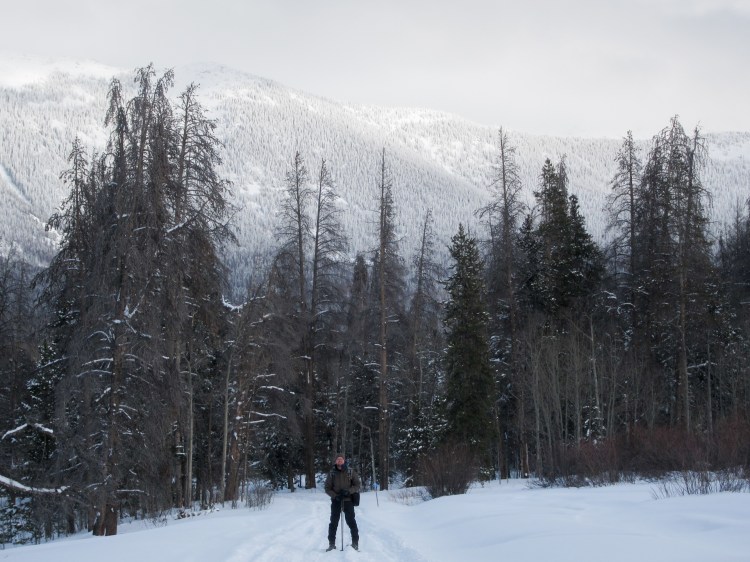
Snowshoeing to North Fork Canadian yurt

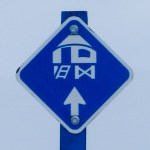
Yurt blue trail markerFresh snow gracefully covered the ground in white curves, giving the landscape a peaceful quality. Whenever we took a break, snow-damped silence blanketed everything. Only occasionally would a bird call or rustling wind interrupt the calm.

The trail led us across the frozen North Fork Canadian River. Soon after crossing, the larger snowmobile path diverged from the yurt path. The remainder of our route was a small dimple in the snow, marked periodically by blue yurt signs.