Appalachian Trail Food Resupply

We created our Appalachian Trail food resupply plan with two priorities in mind:

  1. Stay close to the trail. We prefer to remain in the wilderness away from city noises and distractions. We’ll walk to our resupply points and avoid cars and shuttles wherever possible.
  2. Keep it strictly vegetarian and mostly organic. We’ll buy from grocery stores where feasible and ship food boxes to areas with slim vegetarian pickings.

We used a similar resupply strategy on the Pacific Crest Trail (PCT) and it worked very well. On our Appalachian Trail (AT) thru hike we plan to buy food at 16 stores and pick up 20 maildrops. Some sections of the AT run close to convenience stores and restaurants. In those sections we will carry less food than normal.
PCT Campsite Video and Tent Review

Every evening on the Pacific Crest Trail we were on the lookout for a campsite. Sometimes the search was easy and in a few minutes we found a flat pre-established site with a view. Other times, after walking an extra hour and a half, with daylight almost gone, we had to settle for a tiny spot between bushes. We photographed all our campsites along the PCT and created this short fun video with the assistance of Joe Sofranko. Enjoy!

The Big Agnes Fly Creek UL2 tent performed well during our PCT thru hike. It’s very light. Out of the box this two-person tent weighs 2.6 pounds. We left the stuff sack at home and brought only 6 Vargo titanium tent stakes, bringing the weight down to 2.3 pounds. The Fly Creek UL2 was cozy for the two of us with only a few inches to spare on either side of our sleeping pads, but its small size allowed us to pitch the tent in itty bitty spots when necessary.

Gear Review: Cameras, Solar Panel, Apps, and Phones

IMG_3444

Our Pacific Crest Trail gear review continues. This time we’ll talk about our electronic gadgets, many of which helped us update this blog while hiking.

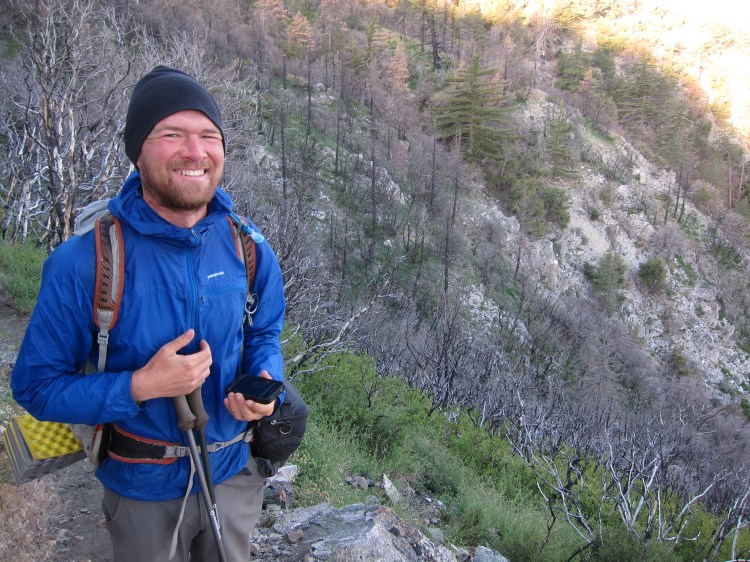
North Star uploads a post from a high point

Smartphone = Apple iPhone 4S 4.8 oz. Our phones were the most versatile items we carried on our thru hike. They enabled us to check our location, view the latest water, fire, weather, and trail condition reports, take notes, update this blog from the trail, learn about our surroundings, and talk with friends and family.

We protected our phones from knocks with Incipio cases. On rainy days, we operated them through waterproof Aloksaks. Because we were careful with them, our phones were none the worse for wear after 2600 miles, and we will definitely be carrying them on the Appalachian Trail.

Apps = Here are the apps we used most frequently on the PCT: